











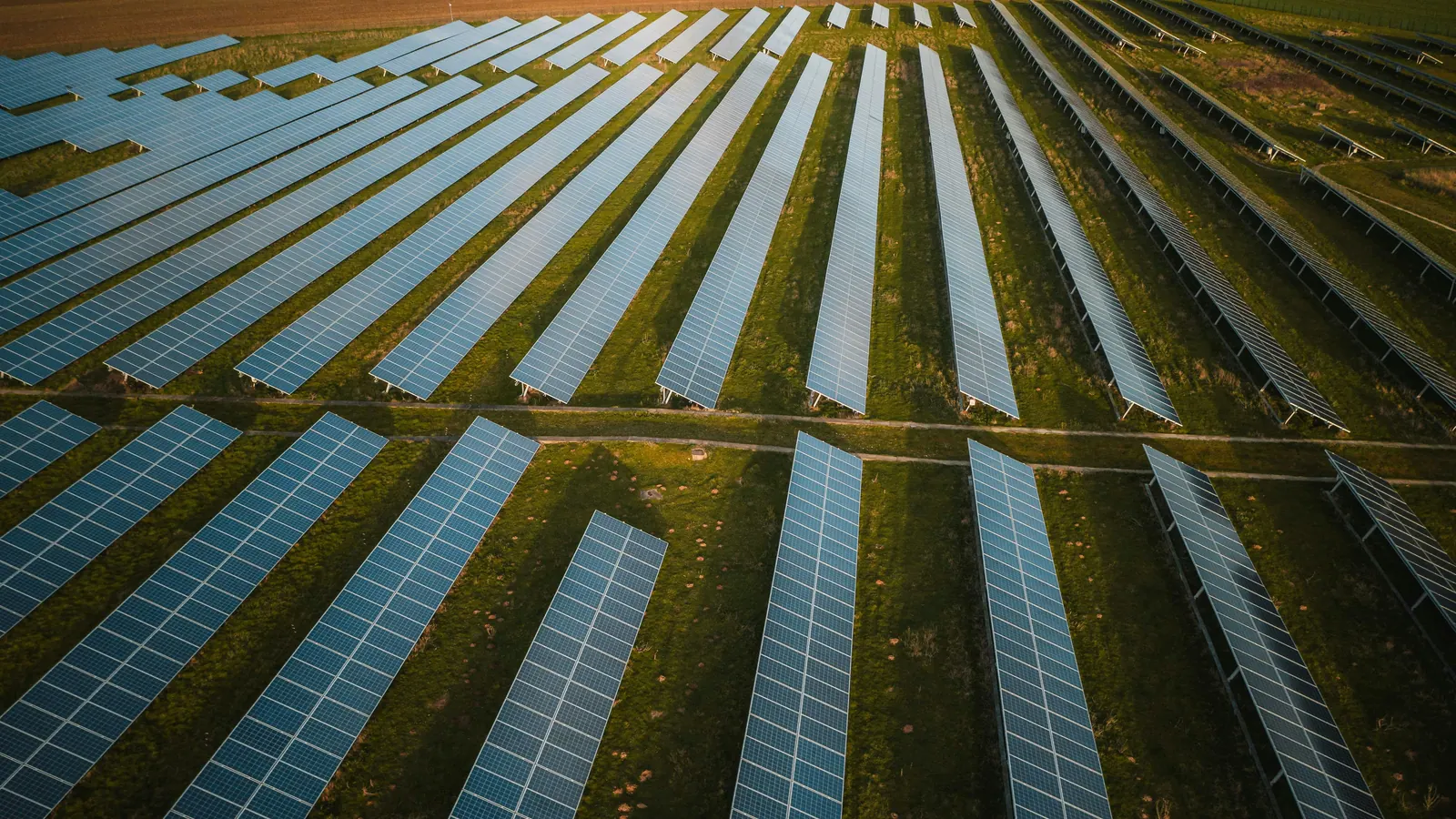


Germany had almost 4.8 million grid-connected photovoltaic systems at the end of 2025, with 106,200 megawatts of capacity, according to the Federal Statistical Office (Destatis). The number of systems grew 17.6% in a year. For installers, wholesalers and storage suppliers the date that matters now is 31 December 2026: the feed-in tariffs published by the Federal Network Agency (Bundesnetzagentur) are based on the EEG 2023, which applies until that day, and the government's successor bill would end the fixed feed-in tariff for new systems.
Key points:
- 4.8 million systems and 106,200 MW at the end of 2025; solar supplied 16.0% of the electricity fed into the German grid in 2025 and 17.8% in the first half of 2026.
- A household paid 37.97 cents per kWh for electricity in the first half of 2026; a small rooftop system commissioned by 31 December 2026 earns 7.70 cents for each kWh of surplus it feeds in.
- Government bill 21/7867 (EEG 2027) would end the fixed feed-in tariff for new systems and cap the feed-in of rooftop systems under 100 kW at 50% of their capacity: the business shifts towards self-consumption and storage.
Why Germany, why now
Demand is measurable. Destatis counted almost 4.8 million photovoltaic systems feeding into public grids at the end of 2025, against just over 4.0 million a year earlier; installed capacity rose 11.8% to 106,200 MW. Small balcony units are generally not included. Solar output fed into the grid rose 17.4% to 70.1 billion kWh in 2025, 16.0% of domestic generation, a record since the series began in 2018. In the first half of 2026 it reached 41.0 billion kWh, up 3.5%, or 17.8% of the total.
The supply chain is largely imported. Germany bought €1.8 billion of solar cells and modules abroad in 2025, 7.8% less than in 2024, and 88.0% came from China, followed by the Netherlands with 5.2%. Exports fell 30.1% to €358 million. Domestic module output dropped 60.6% in the first three quarters of 2025, to 509,200 units. For a trading company, the opportunity sits in distribution, logistics and the components around the module (inverters, storage, mounting systems) rather than in German module manufacturing.
Two federal rules make residential systems cheaper for the buyer. Under Section 12(3) of the VAT Act, the supply of modules, essential components and storage to the operator of a system installed on or near a dwelling is charged at 0% VAT, and the condition is deemed met when the gross capacity in the Market Master Data Register is no more than 30 kWp; the 0% rate also covers installation, imports and intra-EU acquisitions of those goods. Under Section 3 no. 72 of the Income Tax Act, income from rooftop systems of up to 30 kWp per residential or commercial unit, and no more than 100 kWp per taxpayer, is exempt from income tax.
Our numbers: what a kilowatt-hour is worth
The economics of a rooftop system now rest on the gap between the price of grid electricity and the payment for surplus power. All figures are official; the hypotheses are ours and declared.
- Household electricity price: 37.97 cents per kWh on average in the first half of 2026 (Destatis), 6.4% lower than in the second half of 2025.
- Feed-in tariff for a building system up to 10 kW commissioned between 1 August and 31 December 2026, partial feed-in: 7.70 cents (12.22 cents for full feed-in); up to 40 kW: 6.66 cents (Bundesnetzagentur).
- Value of self-consumption: every kWh used on site instead of fed in is worth 30.27 cents more to a household, 4.9 times the tariff. For 1,000 kWh that is €379.70 of avoided purchases against €77.00 of feed-in revenue.
- Business customers: non-households paid a provisional 17.64 cents per kWh, excluding VAT and other deductible taxes. Against the 6.66-cent tariff for a 40 kW system, self-consumption is worth 2.6 times the feed-in.
- VAT on the sale (hypothesis): on an installer's invoice of €20,000 net for a home system of up to 30 kWp, the 0% rate means the customer pays no €3,800 of VAT that the standard 19% rate would add.
Households also earn less from selling power than they used to: in 2023, 4.9% of private households (2.0 million) had revenue from solar electricity, on average €153 a month, against €243 in 2018 (Destatis). An installer who sells storage and higher self-consumption is selling to that trend, not against it.
What the EEG 2027 bill changes
The federal cabinet approved the bill on 29 July 2026 and submitted it to the Bundestag as Drucksache 21/7867 on 7 September 2026. The Bundesnetzagentur states that a successor to the EEG 2023 for the period after 31 December 2026 is under parliamentary deliberation. In the version submitted to the Bundestag:
- the fixed feed-in tariff for new systems is abolished and new systems move, by output class, to direct marketing;
- for systems under 25 kW, the payment for power taken by the grid operator remains available only to systems commissioned before 1 January 2029 (under 50 kW: before 1 January 2028; under 7 kW: before 1 January 2031);
- rooftop systems under 100 kW that feed into the grid must permanently limit feed-in to 50% of installed capacity, except plug-in units of up to 2 kW;
- systems under 25 kW that sell surplus power through direct marketing receive a bonus of 1.5 cents per kWh for up to 48 months;
- the extra support for full feed-in systems is abolished.
The explanatory memorandum says small systems are «often already economic without additional support, as long as they achieve high self-consumption», and that the reform is meant to encourage new systems to be fitted with storage. The law still needs parliamentary approval and, according to the Bundestag news service, the approval of the European Commission.
How to enter the market
- Company: a GmbH needs share capital of at least €25,000; the managing director must be a natural person, with no German residence requirement in the GmbH Act.
- Installation trade: electrical engineering (Elektrotechniker) is listed in Annex A of the Crafts Code. Running such a business independently is reserved to firms entered in the crafts register (Section 1 HwO), and the entry requires a qualified operations manager (Section 7 HwO).
- Grid connection: work on the electrical installation behind the house connection may be carried out only by an installer entered in a grid operator's installer register (Section 13 NAV).
- Registration: operators must register systems in the Market Master Data Register within one month of commissioning (Section 5 MaStRV); the 0% VAT test and the income tax exemption both refer to the capacity recorded there.
- Trade only: a wholesaler or importer of modules and storage does not need the crafts register entry, but sells to installers who do.
What can go wrong
- Rules in transition: the tariffs above cover systems commissioned by 31 December 2026. The final text of the EEG 2027 depends on the Bundestag and on EU state-aid approval; the Bundesnetzagentur notes that the 1.5-cent increase for systems from 40 kW planned in Solar Package I has never taken effect because that approval was not granted.
- One supplier country: with 88.0% of imported cells and modules coming from China, prices and delivery times depend on a single origin.
- Lower electricity prices cut the saving: household prices fell 6.4% in the first half of 2026, mainly because of lower grid fees subsidised by the federal government. Each cent less reduces the value of self-consumption.
- Qualified staff: the crafts register and the installer register both require qualifications that limit how fast an installation business can grow.
Germany and its neighbours
German exports of solar cells and modules, €358 million in 2025, went mainly to Italy (15.9%), Austria (14.8%) and Switzerland (7.2%), according to Destatis. A distributor based in Germany therefore also serves two of the other markets covered on this site. To compare the cost of setting up and running a company in Germany with Italy or Switzerland, see the Germany country page, the comparator for moving your business and the guide to starting a business abroad.
Sources
- Destatis, press release N017 of 12 March 2026: 4.8 million photovoltaic systems, imports, exports and module production
- Destatis, press release 073 of 6 March 2026: electricity generation in 2025
- Destatis, press release 317 of 8 September 2026: electricity generation in the first half of 2026
- Destatis, press release 345 of 30 September 2026: electricity prices in the first half of 2026
- Bundesnetzagentur, EEG support rates for solar systems commissioned from 1 August to 31 December 2026
- Bundestag Drucksache 21/7867, government bill on the EEG 2027
- Bundestag news service hib 701/2026 on the EEG reform
- VAT Act, Section 12(3) and Income Tax Act, Section 3 no. 72
- Crafts Code, Sections 1 and 7 and Annex A, Low Voltage Connection Ordinance, Section 13, Market Master Data Register Ordinance, Section 5, GmbH Act, Section 5